

In a survey published by the Bern University of Applied Sciences in Switzerland, showed initial results on the durability and performance of residential inverters and energy optimizers over a 15-year period. 65% of the inverters had no failures relevant to inverter performance at 15 years in operation.
That is, the failure rate is 34.3% for residential inverters over 15 years in operation.
The survey method was online to investigate the “time to failure” (TTF) of residential inverters. That is, they found that 34.3% of the devices experienced first failures after 15 years.
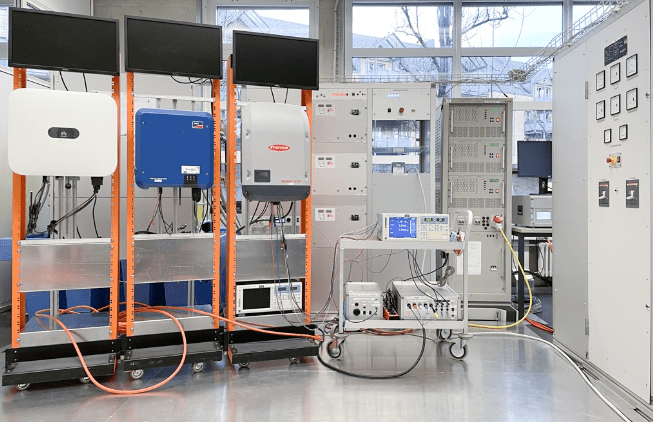
The survey includes inverters from Fronius, Huwai, Kostal, SMA, SolarEdge and Sputnik. But the scientists mentioned that the analyzed devices are representative of the current PV market, because they were purchased several years ago.
In an interview made by a website portal to the researcher Christof Bucher, the researcher mentions “The oldest inverters investigated in this study are from the early 1990s”.
In the survey he has data from 1195 PV systems with 2121 inverters and 8542 optimizers. The inverters used in these systems, most had power ratings between 10 kVA and 15 kVA.
The researchers explain that “A large part of the data was collected with the help of people who learn well the history of PV systems.” And they added that incomplete and unanalyzable data records were eliminated. “The survey gave respondents the opportunity to add their own comments to the technical data.”
The team of researchers analyzed the TTF, and used the Kaplan-Meier estimator, which is commonly used to estimate the survival function from censored, truncated or missing-value figures.
The survival curve considers how many investors are still under observation in the corresponding year of operation. And this could help to assess when a certain percentage of investors will have their first expected failures.
As mentioned earlier, the survey found that more than 65% of investors had no performance-relevant failures after 15 years of operation. The scientists said that the TTF depends mainly on the manufacturer and the location of the device, and also that outdoor installations have shorter TTF rates. They also mentioned that the overall reliability of an inverter is proportional to the reduction in the amount of power electronics. According to the scientists, inverters with power optimizers, the first failure usually occurs earlier than in devices without optimizers.
“The inverters and optimizers in this study represent a broad, though not representative, cross-section of inverters and optimizers used in in-building PV systems in Switzerland and Europe,” they said.
The researchers first announced the survey in July, and said the causes of failures and defects had not been accurately recorded. They said at the time that their findings had confirmed “The rule of thumb that inverters should operate without failure for 15 years.” Until the end of 2025 the research project will be extended and extended to other systems.
Residential inverters performance
Residential Inverters efficiency is affected not only by losses due to switching, but also by losses due to passive elements such as transformers, filters, capacitors, etc.
Inverters regularly have a full load efficiency between 90% and 94% for low input voltage systems (400 V), even higher as in the case of SMA inverter manufacturers or Fronius inverters.
Type of Photovoltaic Inverters
The type of solar inverter is generally classified into two characteristics:
- Their application
- Waveform Broadly
We can say in two groups:
- The grid-tie photovoltaic inverter, for example, the SMA Sunny Boy.
- The photovoltaic inverter for 12V, 24V systems with batteries.
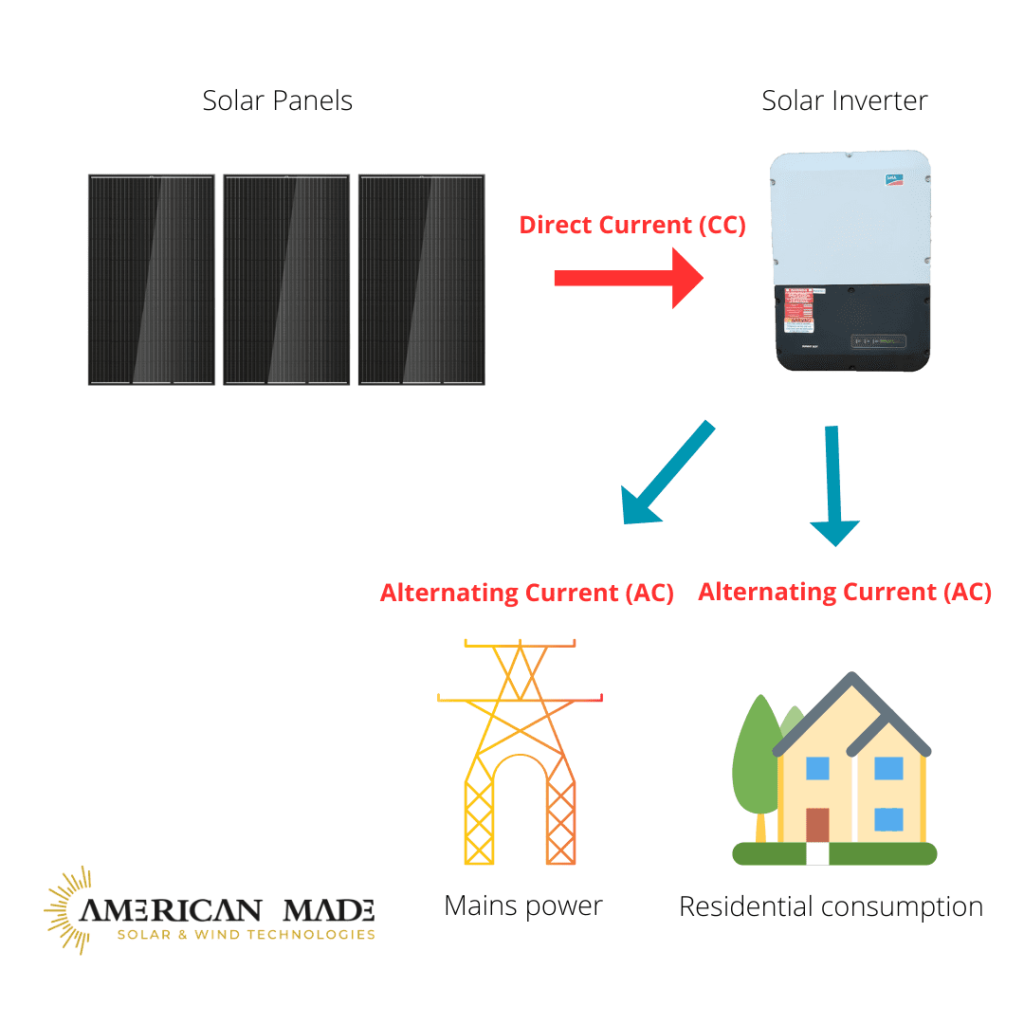
The inverters for solar panels are responsible for transforming the DC voltage of a solar installation, in alternating current for consumption in a place, industry, pumping systems or any photovoltaic system.
Leave a Reply