

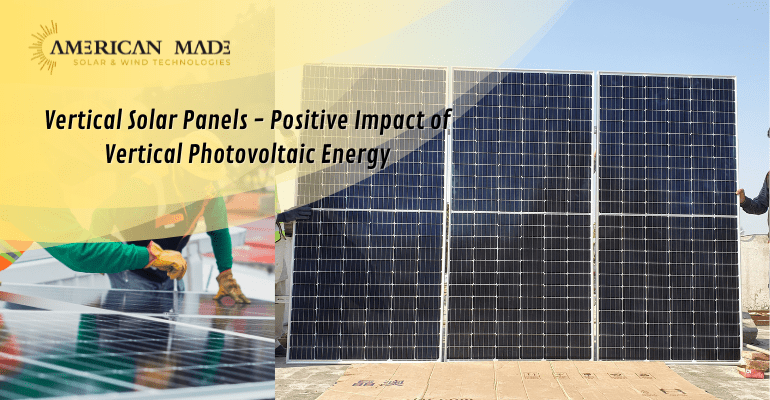
With vertical solar panels placed in an east-west orientation, the energy output of these panels is more constant and allows for peak generation in the morning and evening.
A group of researchers from Leipzig has analyzed the benefits of double-sided solar panels. The results have been very positive and promising, as they allow a more constant energy production.
At present, a blower panel installation is placed facing south and with the solar panels tilted at an angle of 20 to 30 degrees to ensure the highest possible energy production.
But this generates a disadvantage: the greatest amount of production is generated in the central hours of the day and to take advantage of this strong tilt requires storage batteries to deal with the fluctuations that occur during the day.
Vertical Solar Panels
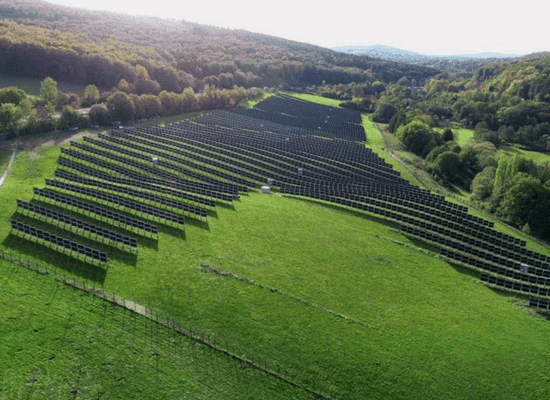
In Leipzig, Germany, the research team has set up a solar park created with double-sided solar panels that absorb energy from sunlight on both the front and back sides.
With the east-west orientation, the energy output of these panels is more constant and allows for peak generation in the morning and evening, which will reduce the load of solar systems on power grids and the need for energy storage.
Profitability
The researchers certified that, although the double-sided solar panels reduce the installed power per surface area by a factor of 4 to 5, the dual use of the land (energy production combined with agriculture) makes it possible to reach a potential of terawatt hours per year.
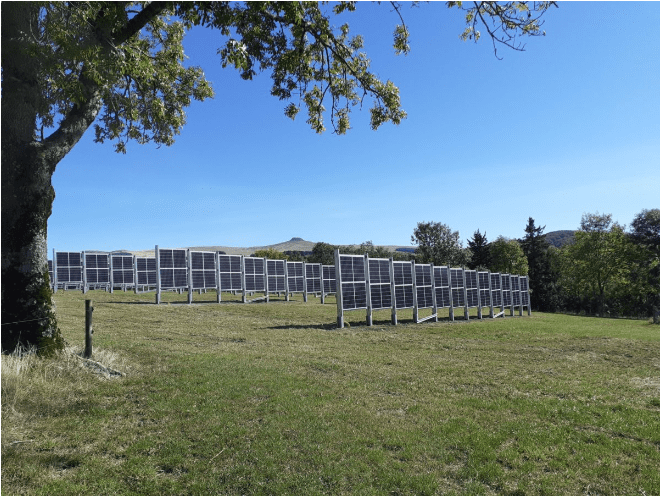
In France, a consortium has been in charge of a pilot project of 89 kWp with 252 vertical solar panels. The company is trying to assess the impact of vertical solar panels on grasslands.
Engie and France’s National Research Institute for Agriculture, Food and the Environment (INRAE) have inaugurated the Camellia vertical agrovoltaic pilot in central France.
According to information in an article, the project has 252 vertical bifacial panels, oriented east/west, with an installed power of 89 kW and an expected annual production of 100 MWh. The nine vertical rows are distributed over 1 hectare and are spaced 12 meters and 18 meters apart. The installation is equipped with a simple, modular and reversible anchoring system to minimize its impact on agriculture.
Camelia is installed on land belonging to INRAE. It is also equipped with 50 sensors for agronomic and meteorological monitoring.
“The Camelia project allows original research questions in agrovoltaics, such as the effect of the construction site on soil compaction, the effects of vertical solar panels on the microclimate of the grassland and on animals,” commented INRAE president Emmanuel Hugo. “The response of the pasture will be compared to a control pasture in the immediate vicinity of the site.”
The technology is changing and advancing in every branch of its existence. The research that we saw previously that is being done on the vertical solar panels have given very good results to optimize solar energy. Hopefully very soon we will see this type of solar panels on the market in the future and we can enjoy the great benefits they would bring to society.

Leave a Reply